



Healthy Inspirations
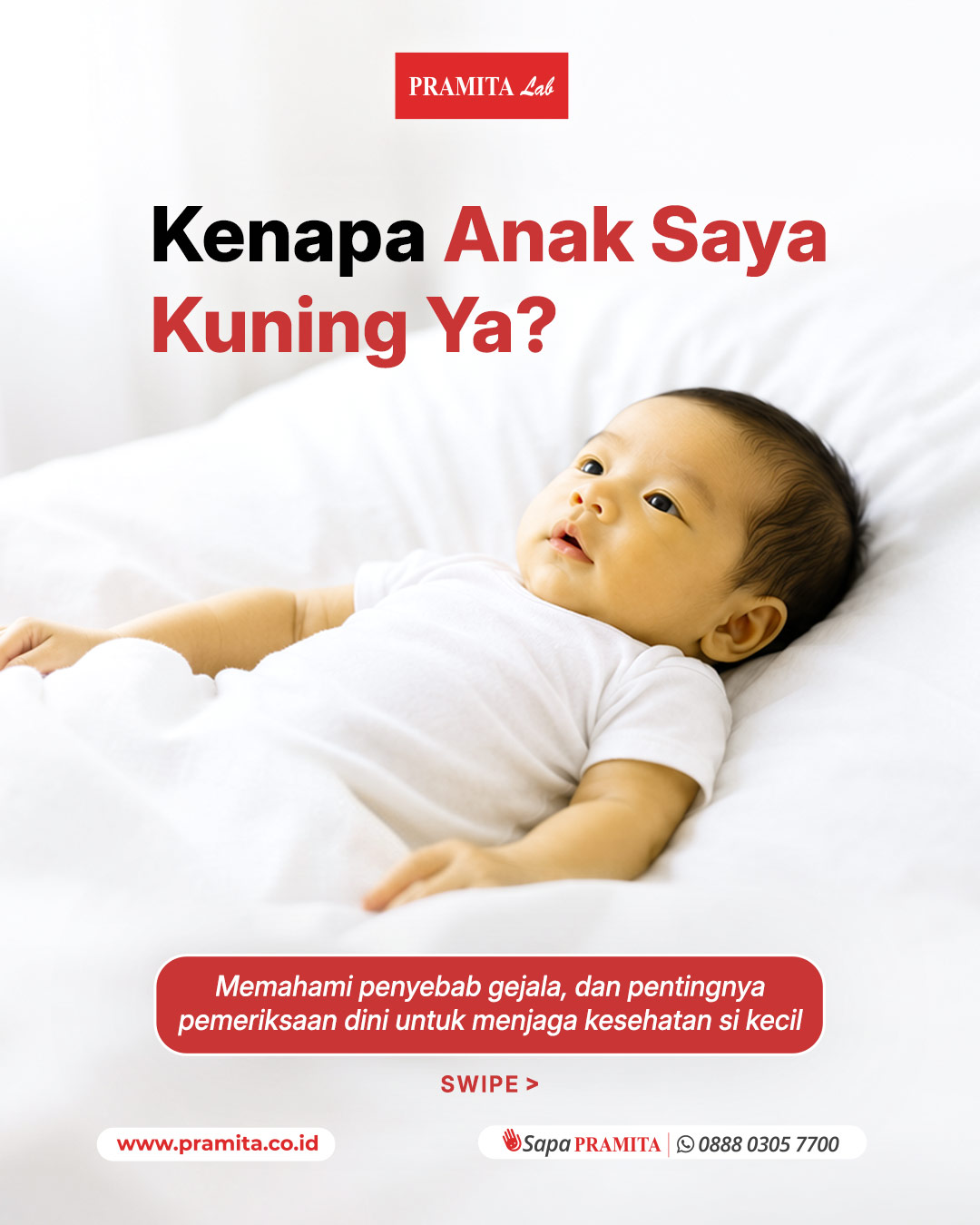
Why Does My Baby Look Yellow?
Tue, 11 Aug 2026Hello, #SahabatPRAMITA. The birth of a baby is a truly joyful moment. However, that joy can sometimes come with concern when parents notice their baby’s skin or the whites of the eyes gradually turning yellow.
This condition is very common in newborns, occurring in around 50–70% of full-term babies and increasing to 80–90% in premature babies. In medical terms, this yellowish discoloration is called neonatal jaundice or hyperbilirubinemia. It occurs when a substance called unconjugated bilirubin builds up in the baby’s blood and body tissues. The yellow color usually becomes visible when the total bilirubin level in the blood reaches around 5 to 7 mg/dL.
Although most cases are temporary and can improve on their own, parents should remain alert because bilirubin can be toxic to a baby’s central nervous system. If bilirubin levels rise too high and the condition is diagnosed too late, the baby may develop a complication known as acute bilirubin encephalopathy.
Early symptoms may include a weaker sucking reflex, a weak cry, and a baby who appears floppy, limp, or unusually weak. If left untreated, this condition can progress to permanent brain damage called kernicterus, which may lead to hearing problems and long-term motor disorders.
This is why early screening through a clinical laboratory is crucial, as visual assessment alone is not accurate enough to determine the severity of jaundice. When needed, doctors may recommend a Total Serum Bilirubin (TSB) blood test in the laboratory. In certain cases, additional tests such as blood type and rhesus factor, G6PD testing, and urinalysis may also be advised.