




Healthy Inspirations
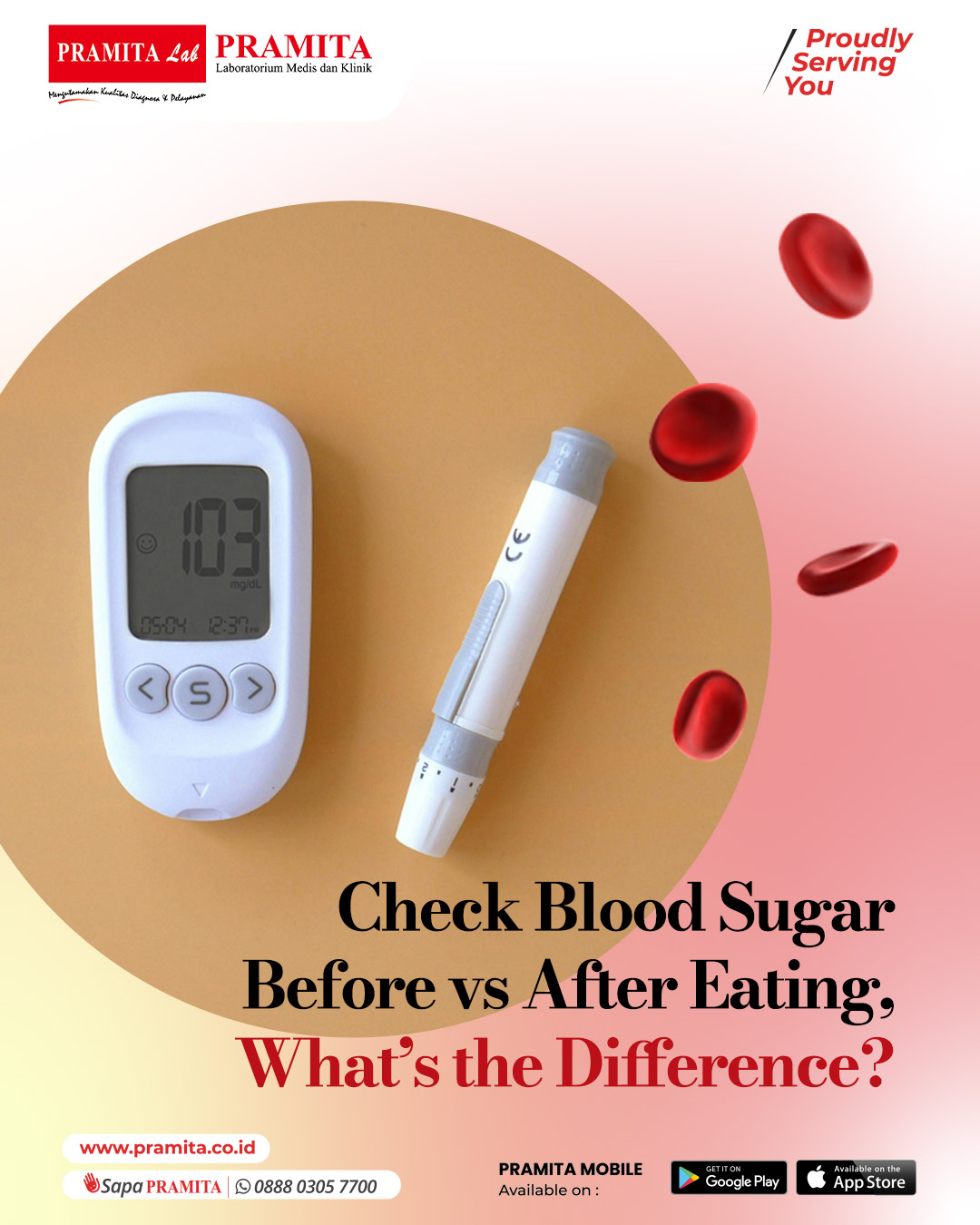
Understanding Sugar Blood: Check Fasting & After Eat, What Difference?
Mon, 17 Nov 2025Understanding Sugar Blood: Check Fasting & After Eat, What Difference?
Friend PRAMITA, maintaining level of blood sugar is one of main pillars for a healthy life and quality. Too high or uncontrolled level of blood sugar can trigger various health problems. Therefore, it is important to understand how to detect it through laboratory examination that is precise.
1. What Is Diabetes Mellitus?
In simple terms, Diabetes Mellitus is a condition where the body loses the ability to control the level of sugar (glucose) in the blood effectively. Imagine sugar as fuel for the body's cells. In a normal condition, the hormone insulin is tasked with inserting this "fuel" into the cell so it can be used as energy. In people with diabetes, this process is disrupted, so sugar accumulates in the bloodstream and can damage various organs over time.
2. Check Blood Sugar Fasting & 2 Hours After Eat: The Benefits?
To see how well the body manages sugar, there are two main types of examinations that are often done in pairs:
Glucose Blood Fasting (GDP): This examination measures the level of blood sugar after Friend PRAMITA fasts (not eating or drinking sweet things) for 8-10 hours. This test provides a picture of the body's basic sugar level when there is no food intake. It is like seeing the "initial" or "rest" condition of the sugar metabolism system of Friend PRAMITA.
Glucose Blood 2 Hours PP (Postprandial): PP is an abbreviation of Postprandial, which means "after eating". This test is done exactly 2 hours after Friend PRAMITA has a meal. The goal is to see the body's response in managing the surge of sugar that enters after eating.
The benefit of doing both is to get a complete picture; a "before" and "after" portrait that shows the body's ability to process blood sugar.
3. Understanding the Examination Results
The results from these two tests will be interpreted by a doctor, but in general the explanation is as follows. A normal condition is indicated by a result of Glucose Blood Fasting below 100 mg/dL and a result of 2 Hours After Eat below 140 mg/dL.
There is also a prediabetes or "yellow light" condition, where the sugar level is already above normal but has not yet entered the diabetes category. This is indicated by a result of Glucose Blood Fasting between 100-125 mg/dL or a result of 2 Hours After Eat between 140-199 mg/dL.
A person can be diagnosed with diabetes if the result of Glucose Blood Fasting reaches 126 mg/dL or more, or if the result of 2 Hours After Eat shows a number of 200 mg/dL or more.
4. When Is This Examination Recommended?
This examination is highly recommended for Friend PRAMITA who has several risk factors, among others:
- Age over 45 years.
- Having excess body weight or obesity.
- Having a family history with diabetes.
- Lack of physical activity.
- Having high blood pressure or not good cholesterol levels.
- Women with a history of giving birth to a large baby (>4 kg) or have experienced diabetes during pregnancy.
Preparation for Fasting Blood Glucose and 2-Hour Postprandial (2H PP) Tests:
- Fasting Blood Glucose : Fast for 8–10 hours before the blood sample is taken. During fasting, do not eat or drink anything except plain water. Avoid strenuous physical activity and excessive stress to ensure accurate results.
- 2-Hour Postprandial Glucose : After the fasting blood sample, eat as usual or as directed by your doctor. Two hours after starting the meal, take the second blood sample. Do not take the sample earlier or later than the 2-hour mark.