




Healthy Inspirations
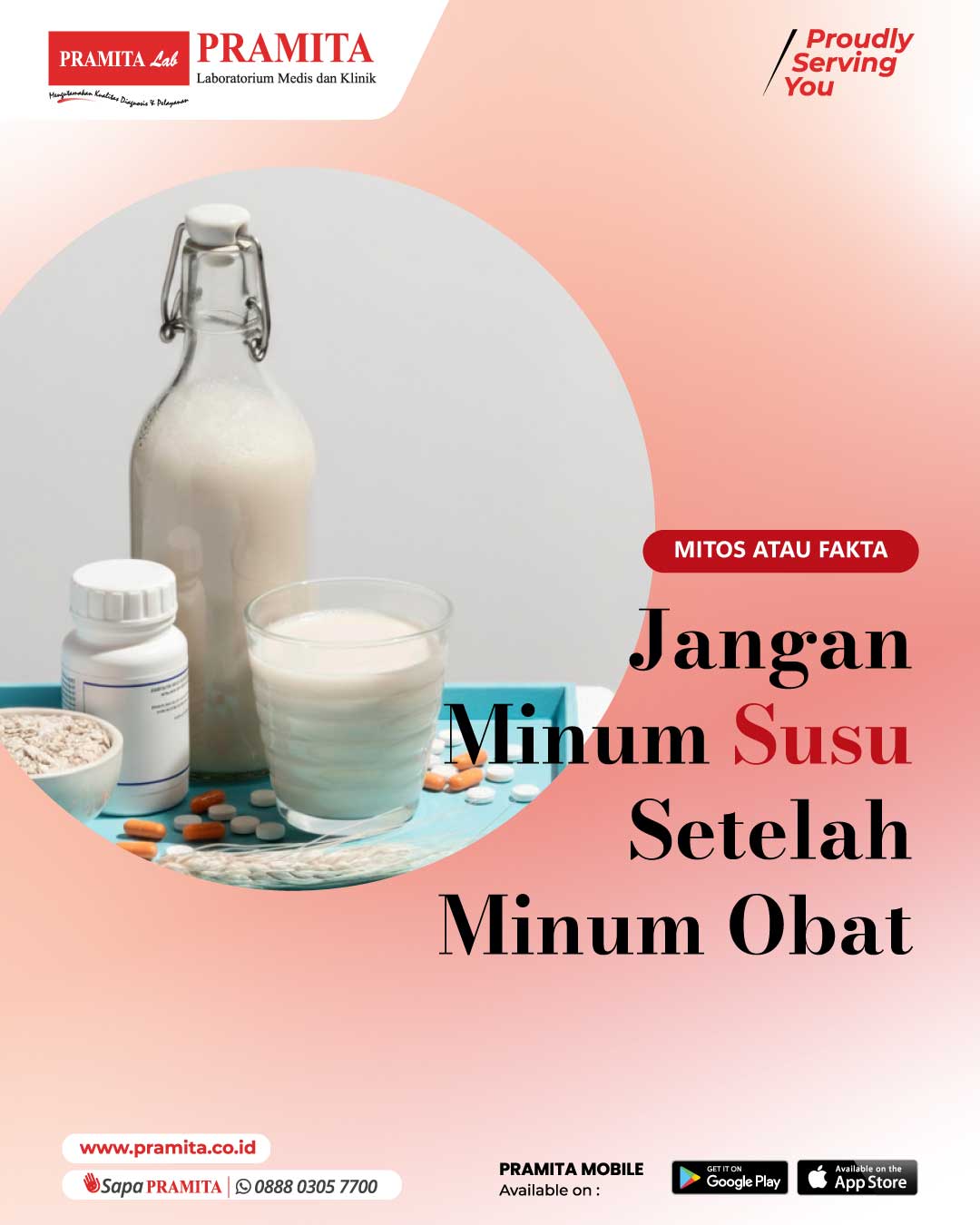
Myth/Fact: Don't Drink Milk After Taking Medicine
Tue, 14 Oct 2025Have you ever heard the advice not to drink milk after taking medicine? Many believe milk can reduce side effects and make the body feel more comfortable. But is it always safe? Let’s discuss together.
Basically, every drug works differently in the body. Drugs can interact with food, drinks, supplements, and even milk. Such interactions may increase or reduce drug effectiveness, or even cause new side effects. Therefore, medication rules cannot be generalized.
Milk contains calcium, protein, and fat. While these are beneficial for health, they can affect the absorption of certain drugs. For example, tetracycline and quinolone antibiotics. If taken with milk, calcium will “bind” to the drug’s active substance, preventing optimal absorption. As a result, the drug’s effectiveness decreases.
The same applies to iron supplements and some anticancer drugs, which are not recommended with milk. On the other hand, some drugs are better taken with milk. For instance, corticosteroids like prednisone or NSAIDs, where milk can help prevent stomach irritation, nausea, or abdominal pain.
So, what’s the solution? For over-the-counter drugs, always read the package instructions. For prescription drugs, consult a doctor or pharmacist about the timing between medicine and milk. Generally, plain water remains the best choice for taking medicine.
Conclusion: Myth or Fact?
The answer is both myth and fact. Not all drugs can be taken with milk, but some are recommended. The key is to know the type of medication and consult medical professionals.