




Healthy Inspirations
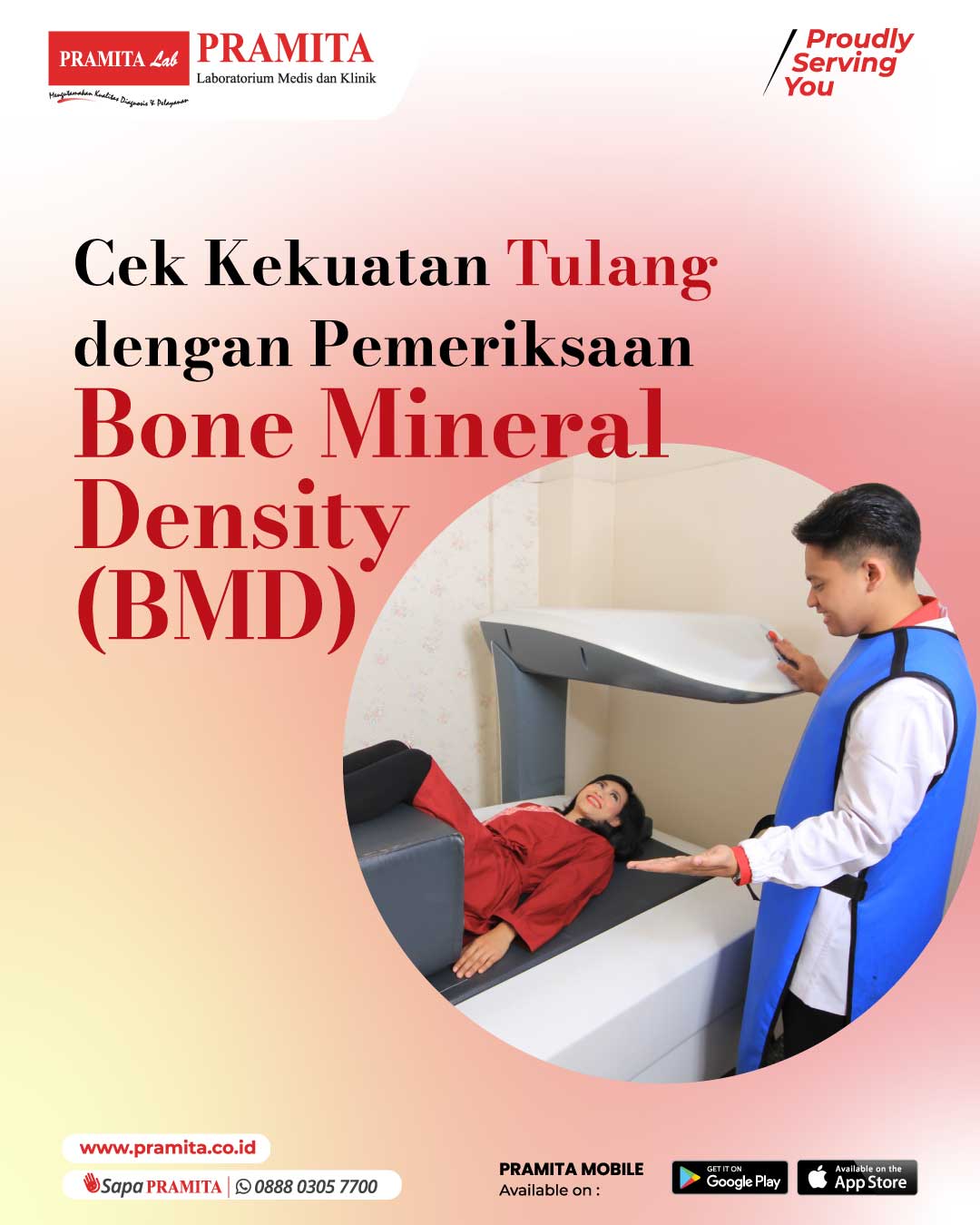
Check Bone Strength with a Bone Mineral Density (BMD) Test
Tue, 21 Oct 2025Sahabat PRAMITA, have you ever imagined how important bones are in supporting daily activities? From walking, running, to simply sitting comfortably, all require strong bones. One way to know bone condition is through a bone density test or Bone Mineral Density (BMD).
What is Bone Mineral Density?
BMD test measures the amount of calcium and other minerals in the bone. The higher the result, the denser the bone, and the lower the risk of fractures. However, values far above normal may also indicate certain bone problems, such as osteopetrosis.
Purpose of Examination
This test aims to detect osteoporosis, assess fracture risk, and evaluate treatment effectiveness. Women after menopause, men with fracture history, or those taking certain medications long-term are advised to take this test.
Types of BMD Examination
The most accurate method is DXA (Dual-Energy X-ray Absorptiometry), divided into:
Central DXA: examines spine and hip.
Peripheral DXA: measures wrist, finger, or heel.
There is also quantitative ultrasound (QUS) for the heel, though less detailed.
Procedure and Results
The test is simple, lasting 15–30 minutes. Patients lie down while the scanner works. Results are shown as T and Z scores:
T ≥ -1: normal
T between -1 and -2.5: osteopenia
T ≤ -2.5: osteoporosis
The Importance of Bone Density Test
This test is safe, low-radiation, and low-risk. Results guide doctors to decide the next step, from lifestyle changes, calcium supplements, to medical therapy.
So, never neglect bone health. With BMD examination at PRAMITA, friends can keep bones strong and stay active longer!